First fully by-wire vehicle to achieve U.S. certification (FMVSS)
Designed to ISO 26262 ASIL D and ISO/SAE 21434, developed to ASPICE
13 years of R&D, more than 1,000,000 km of testing and ~200 patents
What REE does
We’re a software company.We have done the heavy lifting and created certified SDV software that enables you to take full control of your SDV roadmap and customize, evolve and scale the technology in-house.
REE develops intelligent control software for software-defined vehicles: the safety-critical layer that steers, brakes, drives and manages energy. We tailor it to your vehicle programs, so you use as much or as little as you need.
Software
Validated, road-proven packages.
Vehicle dynamicsABS, TCS, ESC, hill hold, rollover mitigation, rear-wheel steer and torque vectoring
Autonomy-readyAD API, redundant by-wire execution, fail-operational control
Driving character and energyDrive modes, steering feel, regen and one-pedal, power and thermal
Hardware
Adaptable to OEM architectures and third-party hardware
REE CenterIntelligent and powerful vehicle-level coordination and redundancy
REE ZonalLocal actuator control and feedback
REE GatewaySecure link to your application domain and the cloud
Collaborative engineering
Working alongside OEM engineering teams on integration, customization, testing and validation
Testing and validationMIL, SIL, HIL, ECU and zonal rigs, test track and extreme climate
CybersecurityTARA, secure boot and HSM, SecOC, secured OTA
Build SDV capability in-house
From Tier 1 dependency to in-house capability.
REE takes a white-box approach. We start your program on proven software, then work alongside your engineers until the capability is theirs. Your data and your vehicle’s behavior stay in your hands, not a third party’s.
Stage 1Launch on proven softwareDeploy REE’s validated control packages on your vehicle program. You get to market quickly without building safety-critical control from zero.
Stage 2Co-develop with our engineersYour teams work alongside REE engineers, using our ASPICE processes, simulation, rigs and test facilities on your program.
Stage 3Own and extendYour engineers configure, calibrate and extend vehicle behavior themselves through REE’s capabilities and interfaces. REE stays on hand as a partner, not a gatekeeper.
Less dependence on external suppliers
Hardware-agnostic capabilities let you choose your actuators, controllers and drive suppliers, and switch them through calibration rather than new development.
Stronger internal teams
Your engineers learn by building production software with ours, and the knowledge stays in your company.
A better position in the market
You own your roadmap, ship features on your schedule and differentiate through software rather than through a supplier’s catalog.
REE’s biggest difference
Intelligent white-box tech to build on.
With our white-box tech, you get transparent, configurable capabilities and direct access to our engineering resources, so the control layer of your vehicle becomes something your teams understand, shape and control.
Black box
What Tier 1 suppliers offer
A separate supplier and system for each function
Tied to the supplier’s hardware and pricing
A closed system: you can’t see how it works or adapt it
Limited control over your product roadmap. Support and upgrades depend on the supplier’s roadmap and availability
The know-how stays with the supplier
Switching suppliers means starting again
High risk integrating the supplier’s closed code with your own software and systems
White box
What REE provides
One platform coordinating the whole vehicle
Hardware-agnostic: choose and change your suppliers
Transparent capabilities with documented architecture, interfaces and behavior
Full control over the product roadmap
You configure, calibrate and extend vehicle behavior yourself through REE’s APIs and tools
Lower integration risk: software built to integrate with third-party and OEM systems, plus REE engineers working alongside yours
Support and upgrades on your schedule: your teams extend and update functions over the air, with REE engineers on hand
Direct access to REE engineers, rigs and processes, so know-how transfers to your teams
The technology
Core advantages of REE’s control software.
Develop, deploy, validate and update vehicle control software on one production-ready platform, and turn software into a lasting advantage for your vehicle programs.
ONE FOUNDATION
Every function, one coordinated system
Steering, braking, propulsion, energy and body control run as one coordinated system on the same REE platform, across vehicle classes and programs. Functions that used to need separate suppliers and integrations work together by design, so each new program builds on the last instead of starting over.
DATA BY DESIGN
Every vehicle reports back
Telemetry, diagnostics and fault detection are part of every REE controller from the start. Fleet data flows to the cloud, where REEai turns it into predictive diagnostics, faster root-cause analysis and clear evidence of what to improve next.
SOFTWARE, NOT STEEL
New functions in weeks, not model years
Driving character, safety functions and new features are defined in software and calibration rather than new hardware. A derivative function takes 7 to 14 weeks, and rollover mitigation went from first analysis to fleet-wide release in five months, with no mechanical changes.
PROVEN BEFORE THE ROAD
Lab to fleet in one pipeline
Model-, software- and hardware-in-the-loop testing, rigs and the test track form one pipeline, developed to ASPICE and designed to ISO 26262. Validated changes then reach vehicles through secure over-the-air updates designed according to UN R155 and UN R156.
Many OEMs have set out to build this. REE has already done it.
OEMs have invested billions in their own SDV platforms, and the same obstacles come up again and again. Each one is something REE has already solved.
Where SDV programs stallWhere REE wins
Software from dozens of suppliers that don’t talk to each other
Each function comes with its own supplier’s code. Changing how your own vehicle behaves can mean asking a supplier for permission, and every update depends on many parties.
One white-box control layer
Steering, braking, drive, energy and body functions are coordinated on one platform. Your engineers change behavior through REE’s APIs and calibration tools, with no supplier’s permission needed.
Suppliers sell sealed systems, not integration
Tier 1s prefer to sell complete, closed systems. Pulling them into one architecture is slow, costly and often blocked.
Hardware-agnostic by design
REE’s software works with the actuators, controllers and drive units you choose, through abstracted interfaces, so you keep your supply chain and your freedom to change it.
Clean-sheet programs cost billions and run late
Building safety-critical SDV software from scratch takes years. Some of the industry’s largest in-house programs have been delayed, reset or cancelled.
Already built, certified and proven
13 years and more than $500 million of R&D, the first fully by-wire vehicle to achieve U.S. certification (FMVSS), and controllers designed to ISO 26262 ASIL D. You start from proven software, not a blank page.
New and legacy architectures in parallel
Running a new architecture on some vehicles and the old one on the rest doubles the work and slows everything down.
Adopt it one function at a time
REE integrates with your existing systems, so you can introduce it gradually, and one software foundation then scales across vehicle classes and programs.
Buying the capability outright
After struggling to build it themselves, some OEMs have paid billions for access to another company’s SDV architecture, and still depend on that company.
Capability that becomes your own
REE gives you proven capabilities and works alongside your engineers until the expertise lives in your teams, without a multi-billion deal.
The software-defined vehicle
A vehicle whose behavior is defined, and redefined, by software.
In a conventional vehicle, almost every function comes with its own control unit and its own supplier’s software: one for braking, one for steering, one for the electric drive, and so on, up to hundreds of them. The software is fixed when the vehicle leaves the factory, and changing it means a workshop visit.
In a software-defined vehicle, those functions move onto a few powerful central and zonal computers running one software platform. How the vehicle drives, what features it has and how safe it is are set in software, and keep improving over the air for the vehicle’s whole life.
Conventional vehicle
A separate control unit for each function
Each with a different supplier’s closed software
Systems optimized one by one, not as a whole
Fixed at start of production; updates need a workshop
Software-defined vehicle
A few central and zonal computers
One software platform the OEM can see and control
The whole vehicle coordinated as one system
Gets smarter after delivery, with fleet data, AI and over-the-air updates
The software an SDV runs on
ApplicationsADAS and autonomy, infotainment, cockpit, services
Usually the OEM’s own
Control layerSteering, braking, propulsion, vehicle dynamics, energy, safety supervision
What REE provides
CloudOver-the-air updates, diagnostics, fleet data and AI
REE and the OEM
The control layer is the hardest part to build: it moves the vehicle, it has to meet the strictest safety standards, and until now it has mostly been bought from Tier 1 suppliers as closed systems. That’s the layer REE builds.
Why it matters for OEMs
What every OEM wants from a software-defined vehicle.
The goals are the same across the industry. The OEMs that reach them shorten development cycles, scale across their lineup and keep earning after the sale.
Lower cost
Fewer control units, far less wiring and simpler assembly, on one architecture reused across the lineup.
Higher quality
The vehicle coordinated as one system, with issues fixed over the air instead of through recalls and workshop visits.
Profitable features
More features and services on every vehicle, from new driving modes to AI-driven data services, for its whole life.
Speed
New functions and updates on your schedule, delivered from software and simulation rather than new hardware programs.
Control
Your own vehicle’s behavior, roadmap and data, decided by you rather than by your suppliers.
The REE difference
A faster, more advanced, intelligentstarting point.
You start from proven, certified software instead of a blank page, and put your own engineering into what differentiates your vehicles.
Already certifiedFirst fully by-wire vehicle to achieve U.S. certification (FMVSS)
Already safety-engineeredControllers designed to ISO 26262 ASIL D and ISO/SAE 21434
Already validatedSimulation, rigs, fault injection and road testing in extreme climates
Already process-readyASPICE-compliant development with full traceability
Programs
Where REE software runs.
The same control software, proven across very different vehicle programs.
Autonomy
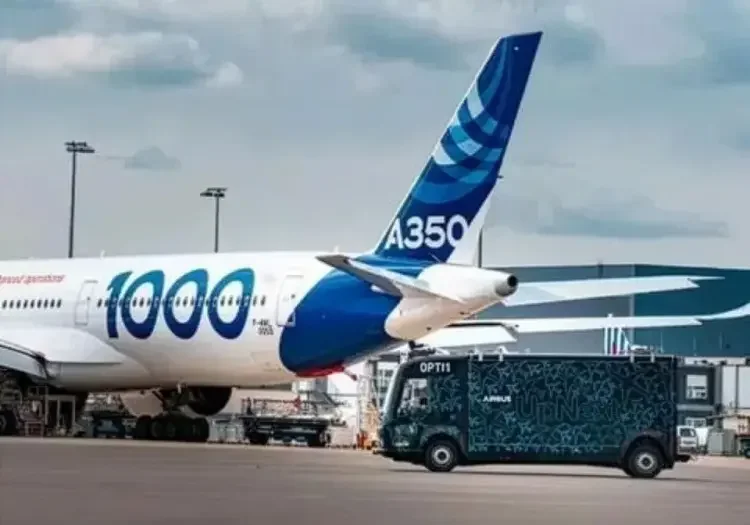
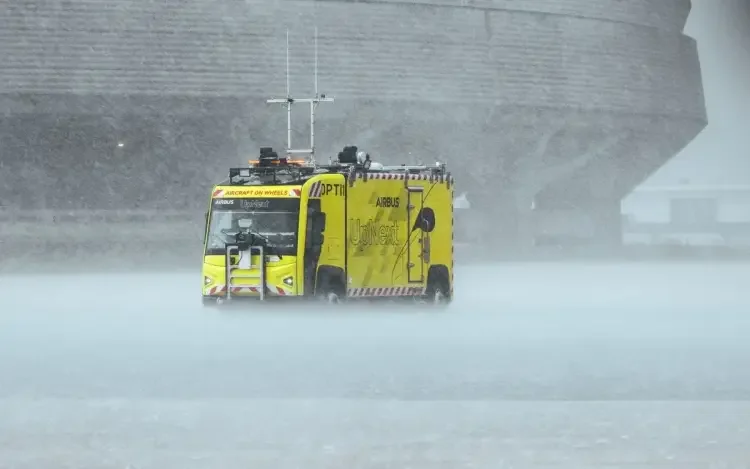
Airbus
Automated ground operations at airports, built on REE’s control foundation.
Customer objective
A controllable vehicle foundation for automated ground operations within Airbus’s broader program.
REE building blocks
REE by-wire control and SDV platform.
Demonstrated outcome
Autonomous operations demonstrated in airport environments over three years of partnership.
Shared autonomous mobility
Flat Former
A fully flat autonomous carrier that kneels to pick up and drop off interchangeable pods.
Customer objective
An autonomous platform that transports and deploys pods such as kiosks and mobile services across locations.
REE building blocks
REE by-wire control and SDV platform, with controllers, gateway, OTA, APIs and diagnostics largely carried over.
Why it matters
A fundamentally different vehicle layout on the same REE foundation, so development focused only on what was new.
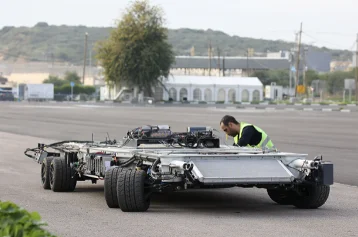
Off-road teleoperation
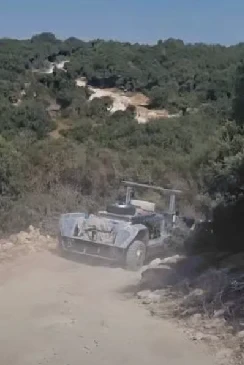
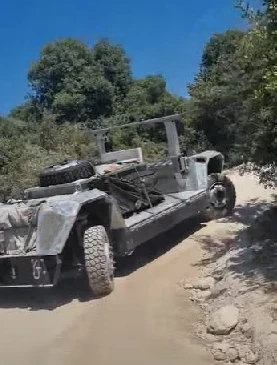
Teleoperated off-road platform
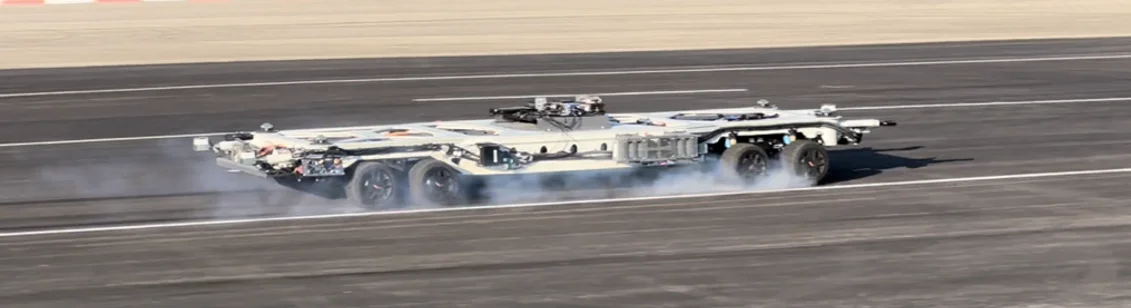
REE’s by-wire control on rough, unpaved terrain, teleoperated from a remote driving station.
Program focus
Off-road mobility on sand, dirt tracks and steep, rocky slopes.
REE building blocks
REE by-wire control and SDV platform.
Teleoperation
A teleoperated system: an operator at a remote driving station commands steering, braking and drive through REE’s by-wire controls.
SDV collaboration
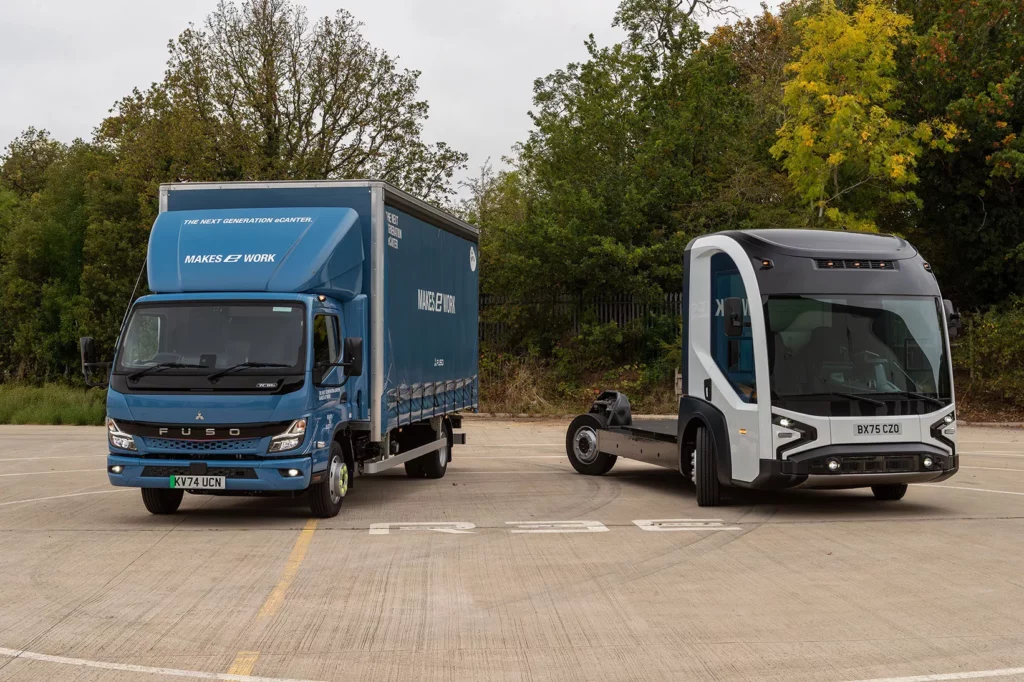
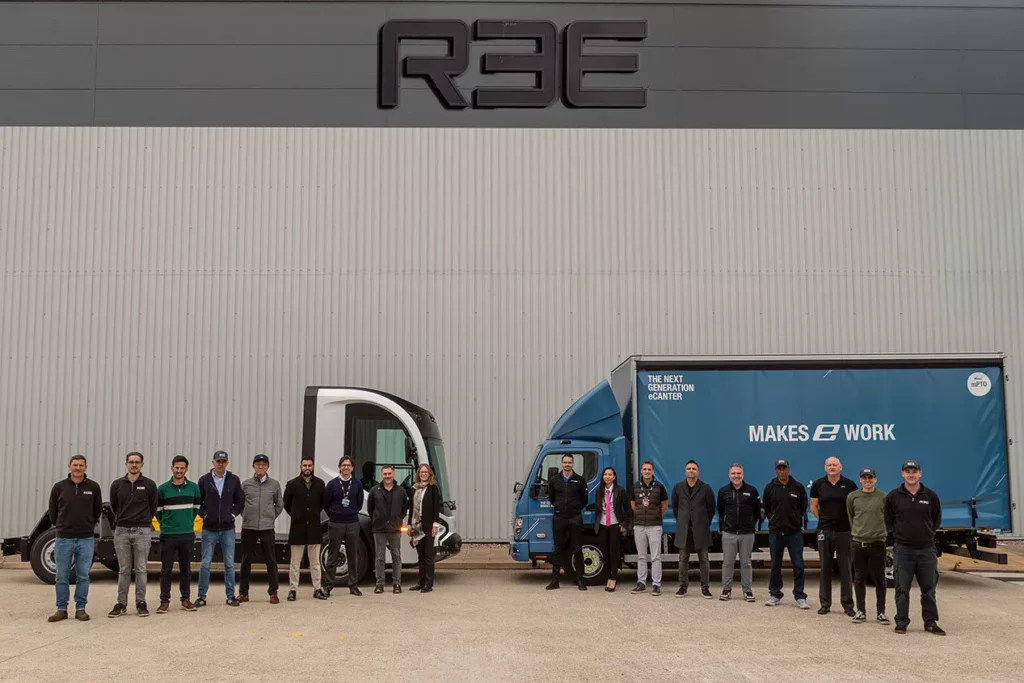
Mitsubishi Fuso
Converting a Mitsubishi Fuso eCanter electric truck into a software-defined vehicle powered by REE’s zonal architecture and by-wire technology.
Customer objective
Accelerate the shift to software-defined trucks that are smarter, safer and upgradable over the air, and evaluate REE as a supplier for a future vehicle platform.
REE building blocks
REE zonal SDV architecture and x-by-wire technology.
Reference program
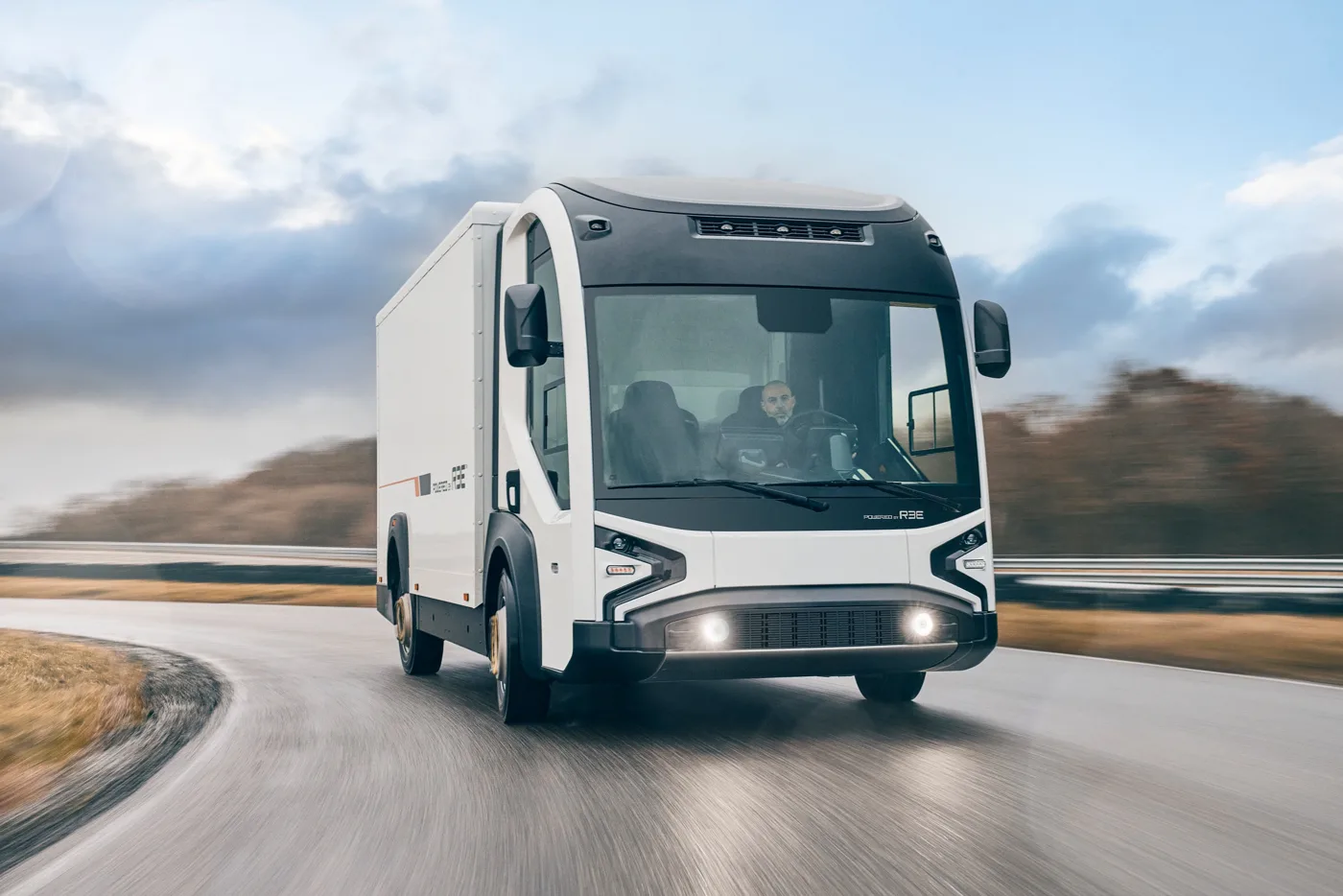
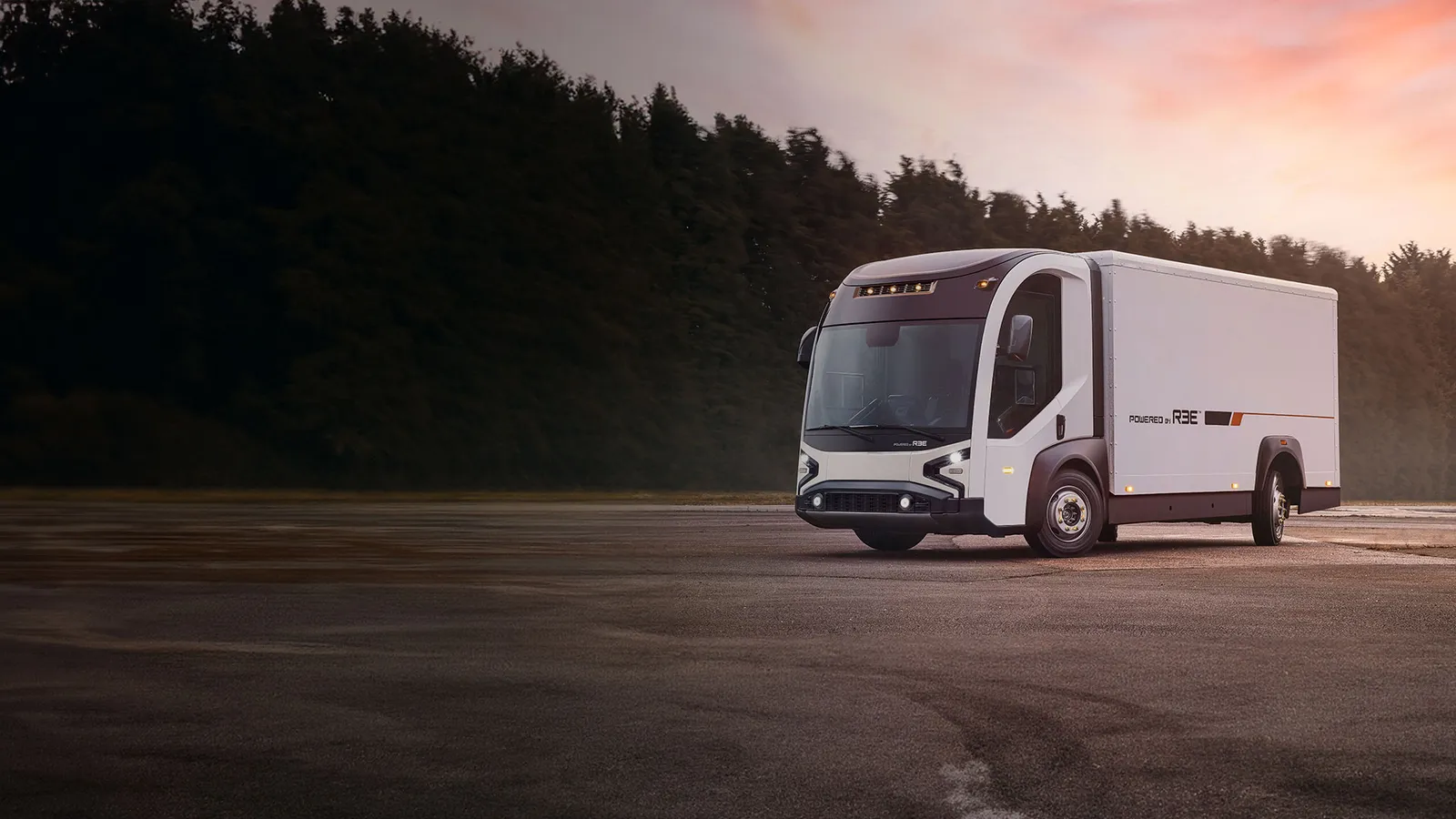
REE P7
REE’s own commercial vehicle program, where the software and controllers were developed and validated end to end.
First-ever fully by-wire commercial vehicle certified to U.S. FMVSS
EPA and CARB certified
Winter testing in Sweden
Rollover mitigation delivered over the air
About REE
13 years on the hardest part of the vehicle.
REE was founded in 2013 to rethink how vehicles are controlled. Since then, the team has invested more than $500 million in R&D, taking by-wire and software-defined vehicle control from first concept to certified, road-proven technology.
Today REE is an automotive software company. We give OEMs that capability and the engineering expertise behind it, so they can build intelligent, software-defined vehicles on their own terms.
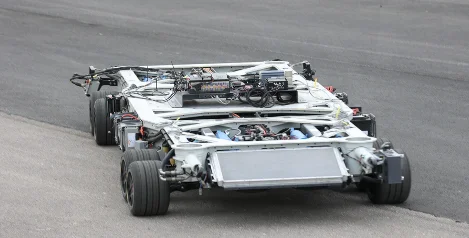
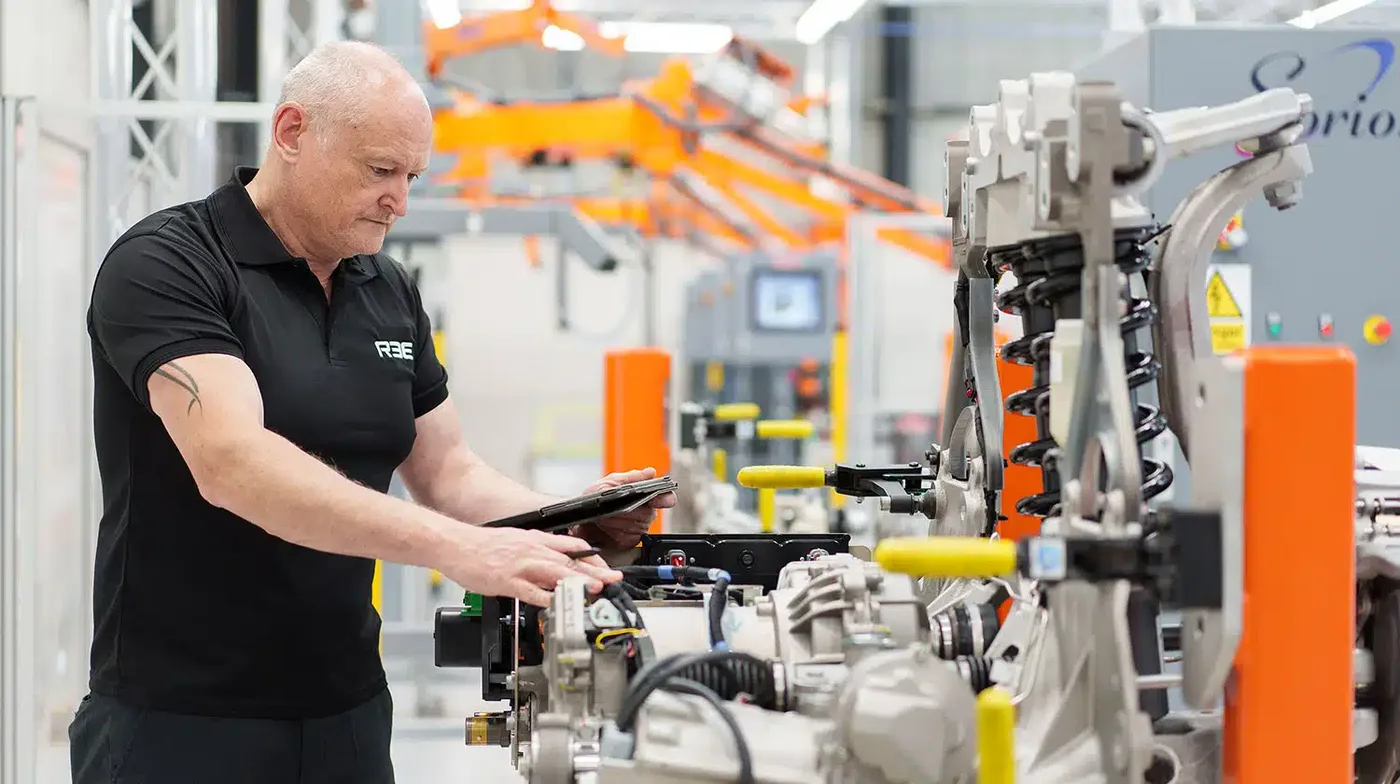
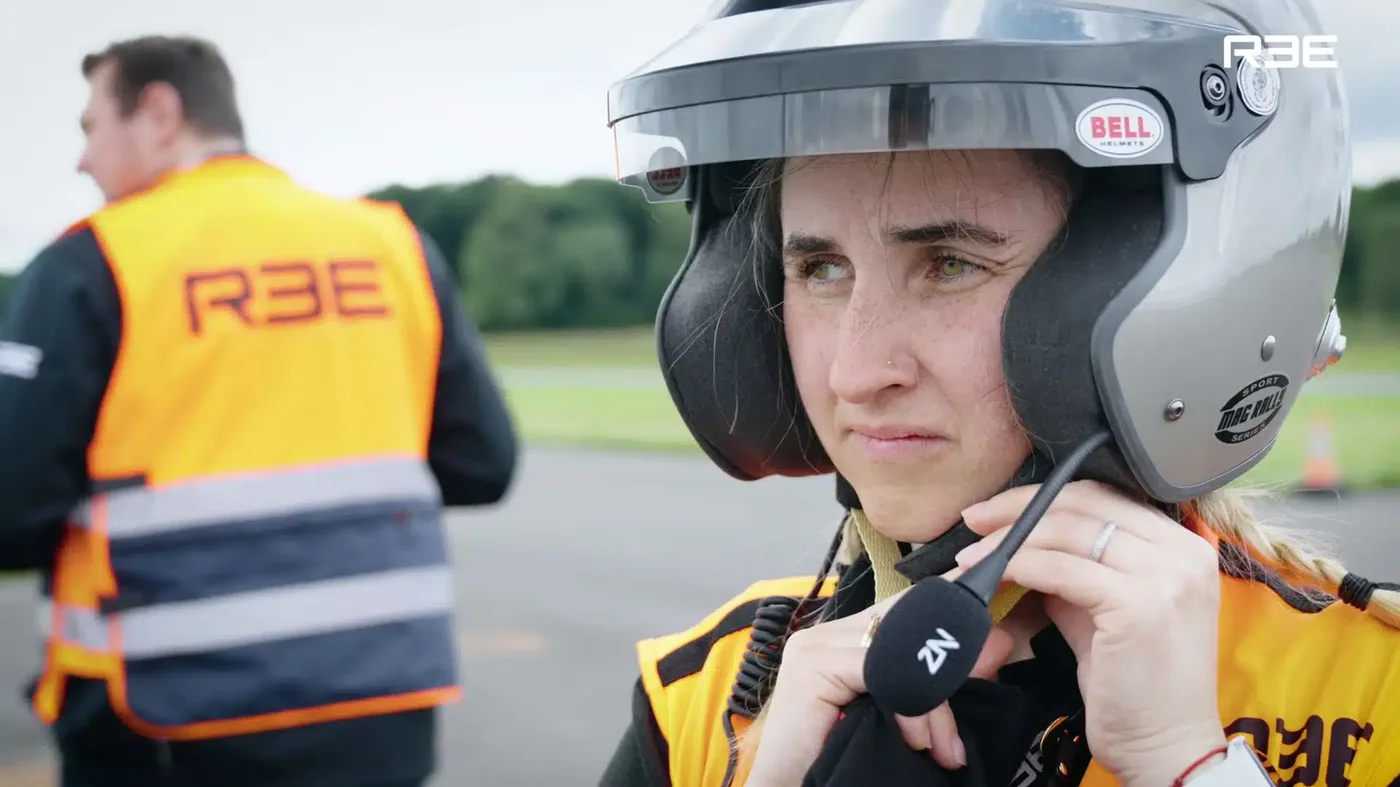
Engineering, from software to the hardware it controlsValidation, on the test track
Leadership
Daniel Barel
Co-Founder & CEO
CEO of REE since co-founding the company in 2013. A serial entrepreneur, Daniel has founded startups in medical devices, cybersecurity and software, co-founded the data management company SpecterX, and previously led the business consulting firm CAUTES International in Hong Kong. BA in Economics and Business Administration, Hebrew University.
Ahishay Sardes
Co-Founder & CTO
CTO of REE since 2013, with more than 15 years of engineering experience across mechanics, electronics, software and research. Previously Head of Engineering at ZIV-AV Technologies. BSc in Mechanical Engineering, Afeka Tel Aviv Academic College of Engineering.
Tali Miller
Chief Business Officer
More than 20 years of industry and leadership experience, now leading REE’s partnerships and customer pipeline growth. Previously at SoftWheel, msystems, SanDisk and Miya. BA in Economics, Tel Aviv University; MBA, INSEAD.
Max Yaskin
Chief Financial Officer
A finance leader with deep, hands-on experience in high-tech companies, from startup to global scale. Tel Aviv University.
More than 25 years across automotive and semiconductor technologies, combining product leadership with a deep engineering background. Before REE, he held product and R&D roles at Valens and Samsung, following engineering positions at Intel, Zoran and LucidLogix. BSc in Computer Hardware Engineering, Technion.
Ohad Stauber
VP R&D and Software Control
More than 20 years of engineering experience across hardware, software and systems, advancing REE’s software-defined vehicle capabilities, from integrated vehicle control and by-wire technology to real-world validation. Previously held engineering and leadership positions at Intel and OSR.
Dr. Peter Dow
VP Engineering
Leads REE’s engineering, bringing a systems-engineering approach to vehicle development, integration and testing. His automotive background includes Geely, Tata and Lotus. PhD from the University of Nottingham, focused on systems modeling of engine and vehicle performance.
Colonel (Ret.) Yaron Edan
Chief Information Security Officer
A cybersecurity and technology executive working at the intersection of business, national security, innovation and digital resilience. His career runs from IDF Intelligence Unit 8200 and the Israel National Cyber Directorate to executive cybersecurity leadership in global high-tech and automotive companies, with a focus on AI, cloud, product and SDV security. Bar-Ilan University.
Joined REE in 2022 after serving as VP Legal Affairs and General Counsel at Cellebrite from 2015 to 2022, and earlier as an attorney at Zellermayer, Pelossof & Co. and SGS. LLB and BA in Economics, Tel Aviv University; Global MBA, Reichman University.
FAQ
Questions OEMs ask us.
What is a software-defined vehicle?
A vehicle whose functions, from how it drives to what features it offers, are defined by software running on a few central and zonal computers, rather than by separate fixed control units. That software can be updated over the air, so the vehicle keeps improving after delivery.
Why do in-house SDV programs struggle?
Most OEMs start from software written by dozens of suppliers that don’t work together, sealed systems that resist integration, and the need to run new and legacy architectures side by side. Building safety-critical control from scratch on top of that takes years and billions. REE gives OEMs that capability already built, certified and ready to integrate.
What does REE do?
REE is an automotive software company. We provide the SDV control layer, the safety-critical software that steers, brakes, drives and manages energy, together with reference ECUs and the engineering and validation resources to bring it into your vehicle programs.
What does “white box” mean at REE?
Unlike a Tier 1 black box, REE’s capabilities are transparent: the architecture, interfaces and behavior are documented, your engineers configure and calibrate them through REE’s APIs and tools, and they work directly with REE’s engineering teams. You aren’t bound to one supplier’s hardware or roadmap.
Can REE software run on our own hardware?
Yes. REE’s software is hardware-agnostic. You can use REE’s reference ECUs as supplied, have us adapt them to your specification, or deploy REE’s packages on your own controllers.
How does REE help us build SDV capability in-house?
We start your program on proven, validated software, then your engineers work alongside ours with our processes, simulation, rigs and test facilities. Over time your teams configure and extend vehicle behavior themselves, with REE as a partner.
Which standards does REE work to?
REE’s controllers are designed to ISO 26262 ASIL D and ISO/SAE 21434, over-the-air updates are designed according to UN R155 and UN R156, and software is developed to an ASPICE-compliant process. REE’s by-wire control runs the first fully by-wire vehicle to achieve U.S. certification (FMVSS).
How does REE use AI?
REEai applies AI analytics to fleet data and digital twins to show what to improve, supports predictive diagnostics and remote service, and powers round-the-clock simulation that speeds up development and validation.
How quickly can new functions be delivered?
A derivative function typically takes 7 to 14 weeks from concept to release, and a completely new function 21 to 38 weeks. REE’s rollover mitigation went from start of development to over-the-air rollout in five months.
Newsroom
Latest news.
See how much of your SDV roadmap is already built.
Tell us where your vehicle program stands. Our engineers will show you how REE’s software can accelerate it.